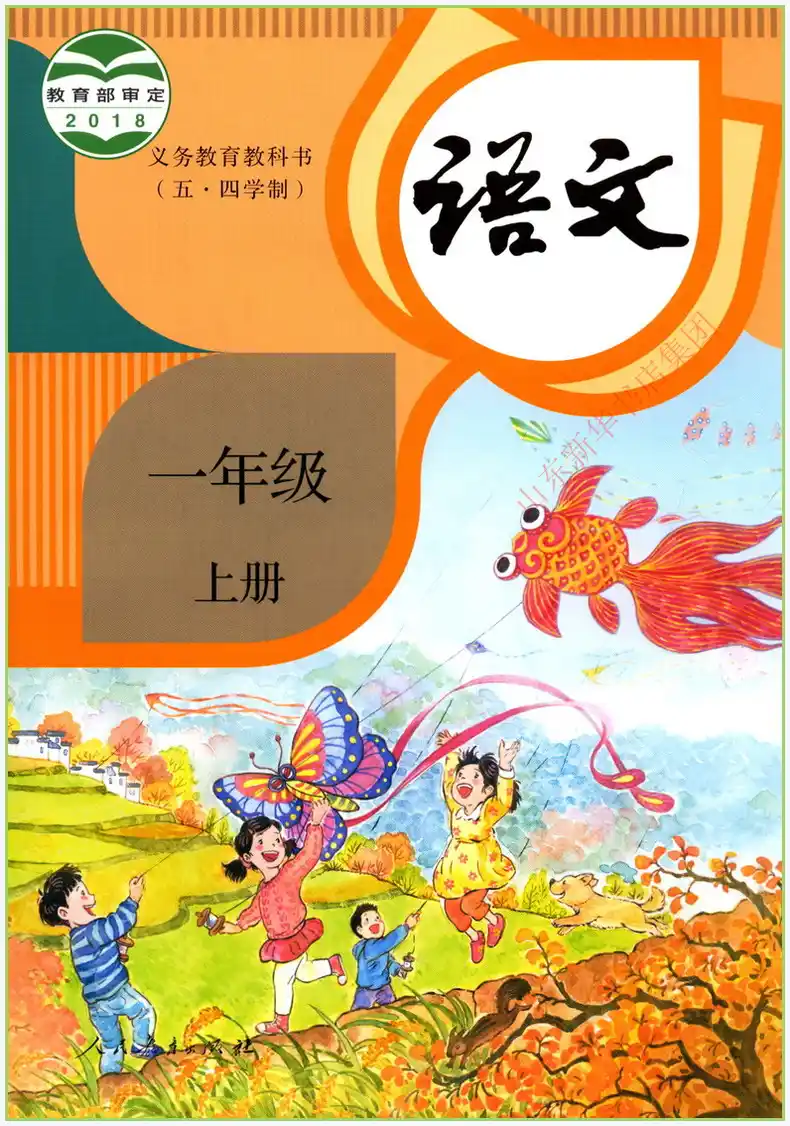
This page provides a full explanation of Lesson 1 from the Chinese Primary School Textbook Year 1 (小学语文一年级上册), the official Mandarin curriculum used in primary schools across China. In Chinese this book is called 小学语文一年级上册, This is the first book that all Chinese students follow as core material in their year one at Primary School.
For the first time, thanks to these videos and out translation the key components of the Chinese Primary Curriculum are accessible for those living outside of China.. The accompanying video that we translate below elaborates on all the content of the compulsory Chinese Primary School Year One Textbook.
By following these videos prepared by the Chinese Department for Education we gives get a chance to listen and learn from perfect Mandarin enunciation by various state primary school teachers plying their trade in Beijing.
Those interested in Chinese culture, or those looking to find out more about the Chinese education system will also find these videos a treasure trove of information and knowledge. If you have ever wondered what Chinese students learn in school then watch this video to hear a Chinese primary school teacher in action.
➡️ Continue to Lesson 2: Chinese Primary School Textbook Year 1
Read the transcript and translate to English
Let's start off with a test. Listen to the first section of the video from 00.04 to 00.30. How much can you understand? Try to translate to English, use the read more tag below for help if you get stuck.
00.04 –
Qīnàide tóngxuémen nǐmenhǎo wǒshì Běijīng Shì Hǎidiànqū mínzú xiǎoxué de dòu línuó lǎoshī. Shǒuxiān zhùhè nǐmen jìnrù le xiǎoxué chéngwéi le yīmíng xiǎoxuéshēng. Kāixué de dìyī tiān xiāngxìn nǐmen yīdìng tèbié kāixīn de duì bàba māma hé shēnbiān de rén shuō wǒ shàngxué le....
Dear students, hello, my name is Dou Linuo, a teacher at Haidian District People’s Primary School in Beijing. Firstly, congratulations on entering primary school and becoming a student. On your first day at school I believe you should happily tell your mum and dad and those around you: I am studying!
Task 2
In this next part of the video we invite you to try a gap fill exercise. Examine the chinese sentence below, and see if you can add the following words in the correct place. If you
need to check the English translation for help.
A. 该 B. 笑着 c. 回呢 d. 校门
00.32 – 当你走进 1.______老师看到你,会 2. ______ 对你说:同学你好。你 c. _______ 怎样 d. _____应?你可以说:老师,您好!
Dāng nǐ zǒujìn xiàomén lǎoshī kàndào nǐ huì/kuài xiàozhe duì nǐshuō: tóngxué nǐhǎo。 Nǐ gāi zěnyàng huíyìng ne? kěyǐshuō ,nínhǎo
As you enter the school gates for the first time your new teacher will greet you with: hello students. How yould you respond? You can answer with: hello teacher.
Answers: 1: 校门 (school gates) 2: 笑着 (smile) 3: 该 (should) 4. 回呢 (respond)
How did you get on with this task? Are you able to understand the content of the Chinese state primary school textbook so far? If so you are doing very well, let's proceed.
00.57 -
Wǒmen dōu miàndài zhī xiàoróng yǒulǐmào de da zhāohu. Cóng jīntiān kāishǐ wǒmen yìqǐlái xuéxí xiǎoxué yǔwén yīniánjí shàng cè de nèiróng. Nà jiù ràng wǒmen dài zhe yúkuài de xìnxīn kāishǐ xuéxí.
We wear a polite smile on our face as we greet others. From this day onwards we will be studying from the Primary School Year 1 textbook. Good。Let’s study happily and with confidence.
Practice your vocabulary
Question 1: How do you say polite in Chinese?
1.20 - 你们看,老师给大家带来了一幅特别漂亮的图。在这图中你看到了什么了呢?你可以食指用。。我看到了——————
Nǐmen kàn lǎoshī gěǐ dàjiā dàilái le yīfú tèbié piàoliang de tú 。 zài zhè tú zhōng nǐkān dào shénme le ne? Nǐ kěyǐ shì zhǐ yòng... wǒ kàn dào le___
Look everyone, teacher has a really beautiful picture to show you. What can you see on the picture? You can say_______.
1.41: 我看到了几多可爱的小朋友。
Wǒ kàndào le jǐduō kěàide xiǎo péngyǒu
I can see lots of lovely little children.
1.46: 我看到了国旗,天安门,还有好多鲜花。
wǒ kàndào le guóqí, Tiānānmén, háiyǒu hǎo duō xiānhuā
I can see the national flag, Tiananmen (square), and also lot's of fresh flowers.
1.55: 我看到书上还有我是中国人五个字。
wǒ kàndào shū shàng háiyǒu wǒshì Zhōngguórén wǔgè cí 。
I can also see the page has five characters that say: I am Chinese.
1.59: 你们观察得可真仔细啊!
Nǐmen guānchá de kè zhēn zǐxì ya
You are right those are the words!
2.31: 老师, 我发现他们都背着书包。
Lǎoshī wǒ fāxiàn tāmendōu bèizhe shūbāo
Teacher, I have noticed that they all have schoolbags on their backs.
2.36: 他们和你们一样都成为了一名快乐的小学生。
Tāmen hé nǐmen yīyàng dōuchéngwéi le yīmíng kuàilè de xiǎo xuéshēng
Just like you they are happy little students.
2.42: 我还发现这些小同学们都在开心的笑,他们一定很高兴。
Wǒ hái fāxiàn zhèxiē xiǎo tóngxuémen dōu zài kāixīn de xiào tāmen yīdìng hěngāoxīng.
I've noticed that all the students are smiling, they must be very happy.
2.50: 是啊他们的小脸上,洋溢着灿烂的笑容,就像一朵朵盛开的花呢。
Shì a tāmende xiǎo liǎnshàng yángyìzhuó cànlànde xiàoróng, jiùxiàng yī duǒ duǒ shèngkāi de huāní
Yes, their bright smiling faces are just like lots of flowers blooming.
The 56 Chinese Nationalities
Vocabulary
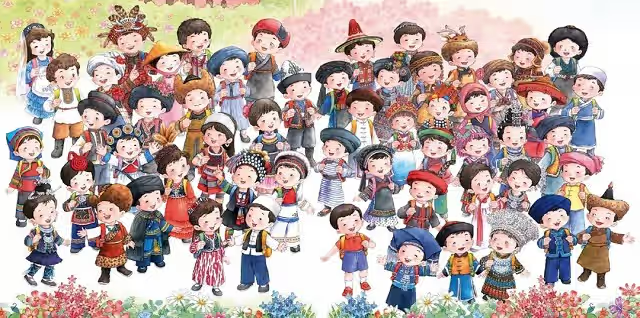
口齿清晰 - kǒu chǐ qīng xī - articulate clearly (diction) 声音洪亮 - shēng yīn hóng liàng - voice loud and clear3.00: 同学们在这幅图中一共有五十六位小同学,他们代表是中国五十六个民族。我们可以说:
tóngxuémen zài zhè fú tú zhōng yīgòng yǒu wǔshíliù wèi xiǎo tóngxué tāmen dàibiǎo shì Zhōngguó wǔshíliù gè mínzú。 Wǒmen kěyǐshuō wǒmende zǔguógè yǒu 56 gè mínzú
Classmates on this picture there are 56 children. They represent the 56 nationalities that make up China. We can say our country has 56 ethnic groups.
3.33: 同学们,我们的祖国是个多民族的大家庭。 你们看这位是汉族的小同学。汉族是我们国家人口最多的一个民族。
Tóngxuémen wǒmende zǔguó shìgè duōmínzú de dà jiātíng. Nǐmen kàn zhèwèi shì Hànzú xiǎo tóngxué. Hànzú shì wǒmen guójiā rénkǒu zuìduō de yīgè mínzú.
Classmates our country is a big family made up of lots of nationalities. This is the Han classmate, the Han Chinese make up the largest proportion of our population.
3.54: 这位是壮族的小同学;这位是回族的小同学;这位是满足的小同学。
zhè wèi shì Zhuàngzú de xiǎo tóng xué; zhè wèi shì Huízú de xiǎo tóng xué; zhè wèi shì Mǎnzú de xiǎo tóng xué
This student is a Zhuangzu nationality student; this is a Huizu nationality student; this is a Manzu Student.
老师 4.10: 那么, 你是哪个民族的呢?如果让你把自己的民族介绍给大家,你回怎样介绍呢。
Nà me, nǐ shì nǎ gè mín zú de ne? Rúguǒ ràng nǐ bǎ zì jǐ de mínzú jièshào, gěi dàjiā nǐ huí zěnyàng jièshào ne?
What nationality are you? If you were to introduce your nationality to everyone, how would you do it?
老师 4.22: 注意当我们在发音的时候一定要声音洪亮,口齿清晰,让大家听清楚。
Zhùyì dāng wǒmén zài fāyīn de shíhòu yīdìng yào shēngyīn hóngliàng, kǒu chǐ qīng xi, ràng dàjiā tīng qīngchǔ
Remember, when speaking to articulate clearly with a big voice.
老师 4.34: 那接下来,我们先来听听这几位同学的介绍吧!
nà jiē xià lái*, wǒmén xiān lái tīng tīng zhè jī wèi tóngxué de jièshào bā
So, next, we will listen to these student's introductions.
NOTE- 接下来, very simplY put this means next. It is a discourse marker. Therefore, we could hear it used in a speech, to show the speaker is moving on to a new topic.
学生 4.40 - 我是维吾尔族的小朋友我穿的连衣裙是用了彩色鲜艳的艾德莱斯稠制成的。
wǒ shì wéi wú ěr zú de xiǎo péng yǒu wǒ chuān de lián yī qún shì yòng liǎo cǎi sè xiānyàn de àidéláisī chóu zhì chéng de.
I am a Uighur Child, I am wearing a brightly coloured dress made of Adelaide* silk.
NOTE - Adelaide is a type of tie-dyed silk with bright pattern, from the North-western province of Xinjiang, in China. This fabric, also called Etles silk, is worn as part of traditional dress by the women in Xinjiang.
学生 4.47 - 我是苗族的小朋友。我家住的房子是吊脚楼,靠着山,挨着水,可美了。
wǒ shì miáozú de xiǎo péngyǒu 。 Wǒ jiā zhù de fángzǐ shì diào jiǎo lóu , kào zhe shān , āi zhuó shuǐ , kěměi le.
I am the Miao student. My family home, which is on stilts, rests against the mountain, by the water. It is really beautiful. 学生 5.00 - 我是彝族的小朋友火把节是彝族一个重要的节日过节是回有赛马, 摔跤*, 都很多活动。到夜晚田间地头到处是点燃的火把。
wǒ shì yízú de xiǎo péngyǒu huǒbǎjié shì yízú yī gè zhòngyào de jiérì guò jié shì huí yǒu sài mǎ , shuāijiāo *, dū hěn duō huódòng。dào yèwǎn tiánjiān de tóu dào chǔ shì diǎ rán de huǒbǎ
I am the Yizu student. The fire festival is an important traditional festival for our people. We celebrate by doing lievely activities like wrestling and riding horses. At night the fields are lit up by torchlight.
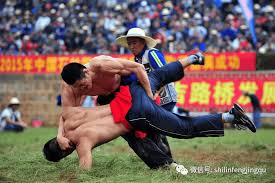
Note: 彝族摔跤, is Yi wrestling, a martial art, a type of freestyle wrestling done by the Yizu nationality in China. Yi wrestling competitions often form part of the celebrations of weddings in Yunnan, and traditional festivals.
学生 5.17 - 我是土家族人。 我喜欢摆手,很多人边唱,边跳,特别壮观*。
wǒ shì tǔjiā zúrén 。 wǒ xǐhuān bǎi shǒu , hěn duō rén biānchàng , biāntiào , tèbié zhuàngguān。
I am a Tu. I like to do the holding hands dance. People hold hands while singing, it's really splendid.
Note - 壮观 means splendid or incredible. Could be used a stage, a mountain, a piece of architecture etc, Note - note the use of 边+ verb, 边+ verb. This means to do two things at the same time, in this case to hold hands while singing.
5.30 学生 - 我是藏族的小朋友, 我的家在青藏高原,这里被称为世界屋脊
wǒ shì cángzú de xiǎo péng yǒu , wǒ de jiā zài qīng cáng gāo yuán , zhè lǐ bèi chēng wéi shì jiè wū jǐ
I am the Tibetan friend, our home is in the Tibetan plateau, which is called the ridge of the world.
5.39 是世界上海拔最高的地区。
shì shìjiè shàng hǎibá zuì gāo de dìqū
It is the highest point above sea-level in the world
5.44 我是蒙古族人, 我们常常喝奶茶,吃炒米,奶皮,奶豆腐。很美味。
wǒ shì mēnggǔ zúrén , wǒ mén cháng cháng hē nǎi chá , chī chǎo mǐ , nǎi pí , nǎi dòu fǔ 。 hěn měi wèi.
I am the Mongolian Student. We often drink milk tea, eat fried rice, milk bread and milky tofu. Really delicious!
Note 1 - Note that the Mongolian student enjoys a variety of delicious dairy foods, this is in keeping with their historical connections to farming and the lush green pastures of their homelands.
5.54 - 好。谢谢这几位小同学的介绍。我们五十六个民族就是相亲相爱的一家人。我们都有一个共同的名字:中国人。
Hǎo 。 xièxiè zhè jīwèi xiǎo tóngxué de jièshào 。 Wǒmén wǔshíliù gè mínzú jiùshì xiāng qīn xiāng ài de yī jiārén 。 Wǒmén dū yǒu yī gè gòngtóng de míngzì : zhōngguórén.
Good. Thank you to the students who introduced themselves. Us 56 nationalities are close to each other and love each other. We all have one name together: Chinese.
Note: it is interesting to see that from the very start of the first lesson of the Chinese primary school textbook (小学一年级) the students are encouranged to reflect on being part of one big Chinese family.
Although various students have introduced their own nationalities, they are encouraged to look upon themselves as part of just one Chinese country. China is made up of 56 nationalities, with Han Chinese being the largest, and the Chinese government is clearly keen to instil a sense of 'Chineseness' from an early age.
However, we might compare this to how countries such as Britain foster values such as tolerance and diversity, with young people being united under these British values. Other countries such as the US, unite their young ones under the Star Spangled Banner.
Our Nation is a Garden
Continuing the them of togetherness our teacher talks about China being one big garden for all. A kind of Garden of Eden.
6.19 Teacher - 我们的祖国是一个大花园。五十六个民族就像是五十六朵美丽的花。
Wǒmén de zǔguó shì yīgè dà huāyuán 。 Wǔshíliù gè mínzú jiù xiàng shì wǔshíliù duǒ měilì de huā 。
Our Country is one big garden. The 56 nationalities are like 56 beautiful flowers.
6.28 - 那接下来啊, 我们一起来听一首好听的歌曲:我们的祖国是花园。
Nà jiē xià lái ā, wǒmén yīqǐ lái tīng yī shǒu hǎotīng de gēqū : wǒmén de zǔguó shì huāyuán 。
Now, moving on, let's listen you a song that sounds really nice" Our nation is a garden.
6.39 - 现在你可以站起来。我们一边听一边跟着拍手唱。
Xiànzài nǐ kěyǐ zhànqǐlái 。 Wǒmén yībiān tīng yībiān gēnzhe pāishǒu chàng.
Now you can stand up. We will clap our hands to the song as we listen.
Grammar Note 一边。。。一边。。。
一边。。。一边。。is the Chinese equivalent of while and is used commonly to show that people are doing two things at the same time.
The structure is 一边 + verb.. 一边 + verb
Examples:
他一边听歌,一边写作业 - wǒ yī biān tīng nǐ jiǎng kè , yī biān zuò bǐ jì - She is listening to music while doing her homework.
他一边吃饭,一边看电视 - 他一边吃饭,一边看电视 - He is watching TV while eating his dinner
我一边听你讲课,一边做笔记 - I am listening to the class while taking notes
我一边听你讲课,一边做笔记 - wǒ yī biān tīng nǐ jiǎng kè , yī biān zuò bǐ jì - He is taking notes, while listening to the lecture.
The 一边。。。一边。。structure can also be used to form questions you can use 喜欢 (like) at the start and 吗 (question) at the end. See example, below:
-你喜欢一边听歌,一边写作业吗?
-nǐ xǐ huān yī biān tīng gē , yī biān xiě zuò yè má ?
-Do you like to listen to music while you do your homework?
zhǔn bèi hǎo le má?
Are you ready?
我们的祖国是花园
我们
we
的祖国
our country
是花园
is a garden
花园里
in the garden
花朵
flowers
真鲜艳
are bright
和暖
warm
的阳光
sunshine
照耀
shines on
我们
our
每个人
everyone
脸上
on the face
都
all
笑开颜
smile brightly
哇哈哈
laugh
哇哈哈
laugh
每个人
everyone
脸上
on the face
都
all
笑开颜
smile brightly
哇哈哈
laugh
哇哈哈
laugh
每个人
everyone
脸上
on the face
都
all
笑开颜
smile brightly
哇哈哈
laugh
哇哈哈
laugh
每个人
everyone
脸上
on the face
都
all
笑开颜
smile brightly
The song 我们的祖国是花园 (our country is a big garden) is known and loved throughout China, thanks to it;s special place as
the first one introduduced as part of the Chinese primary school curriculum. Having introducd it our teacher continues the class..
7.24 (teacher) 好,同学们请坐。多好听的歌曲啊。五十六个民族的人们就像是花朵一样。在祖国的大花园里张开了幸福的笑脸。
Hǎo , tóngxuémén qǐng zuò。 Duō hǎotīng de gēqū ā 。 Wǔshíliù gè mínzú de rénmén jiù xiàng shì huāduǒ yīyàng, Zài zǔguó de dà huāyuán lǐ zhāngkāi liǎo xìngfú de xiàoliǎn.
Good. students, please sit. There were lots of nice sounding voices。 The 56 nationalities are like the flowers of our the country: blooming with a smile.
7.40 - 同学们,我么再来看这附图。在五十六个民族小同学生后就是胸围的天安门。
Tóngxuémén , wǒ men zàilái kànzhè fù tú 。 Zài wǔshíliù gè mínzú xiǎo tóngxué shēng hòu jiùshì xiōng wéi de tiānānmén.
Students, let's look at the picture again. behind the picture of the 56 students is the great Tiananmen.
Cultural Note - Zài wǔshíliù gè mínzú xiǎo tóngxué shēng hòu五十六个民族小同学生后就是胸围的天安门 Our teacher continues the patriotic nature of this first class by now introducing Tiananmen (Square). Note the part of the sentence where she says 在五十六个民族小同学生后, Zài wǔshíliù gè mínzú xiǎo tóngxué shēng hòu in Pinyin
This means behind the 56 students. The structure here is (noun) 在 Zài (noun) + 后 + hòu + 就是 jiùshì + noun. We could make another sentence using this structure, such as 在图书馆后就是博物馆, meaning behind the library there is a museum. In this case though she is introducing Tiananmen Square, which due to it's position in the centre of Beijing, close to the Government headquarters at 王府井 WangfuJing, holds a special place in Chinese hearts.
As part of the square we can also find the Mausoleum of Mao Ze Dong, and the entrance to the Forbidden City. Later in the class we also see footage of the daily flag raising ceremony that takes place at dawn.
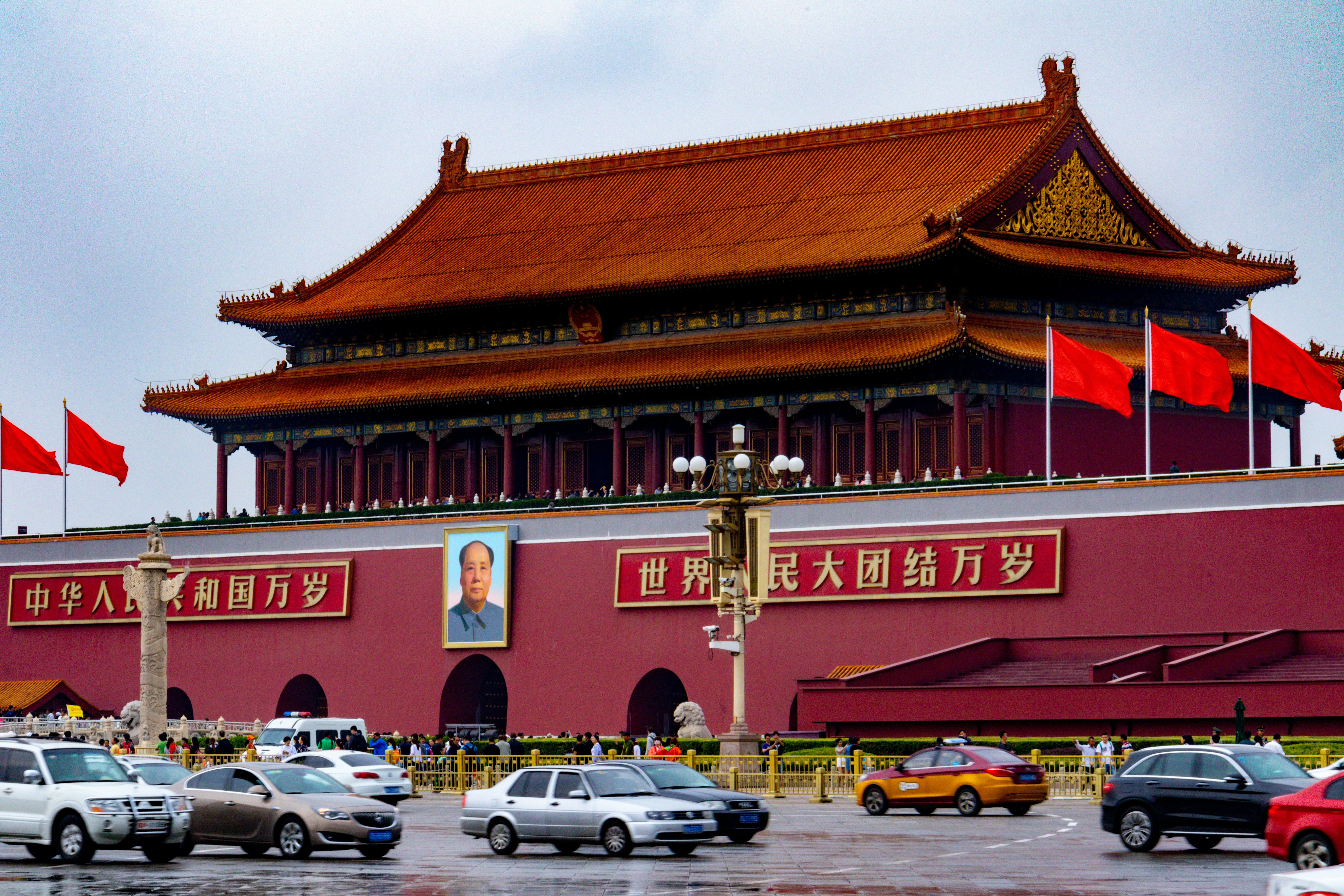
7.50 老师 - 你用小手指一指天安门,并清楚的说说你看到什么了。天安门高达而美丽,中间还先挂着我们伟大领袖毛主席的画像。
lǎo shī - nǐ yòng xiǎo shǒu zhǐyīzhǐ tiānānmén , bìng qīngchǔ de shuōshuō nǐ kàndào shénmele。 Tiānānmén gāodá ér měilì , zhōngjiān huánxiān guàzhe wǒmén wěidà lǐngxiù máozhǔxí de huàxiàng.
Teacher - Use your finger to point at Tiananmen, while clearly saying what you see. Tianamnen is great and beautiful, in the centre still hangs the portrait of our great leader Mao Ze Dong.
Cultural Note - Having introduced a patriotic song, a unifying landmark of China, we now meet Mao Ze Dong, the revolutionary leader who becamse the first president of the new Communist China in 1949. Although a divisive figure for some,
Mao Ze Dong is immensely popular in China, and his portrait is proudly on display on the central entrance to Tiananmen Square.
中华人民共和国 - The People's Republic of China
Vocabulary
中华 Zhōnghuá - A historical, formal term for China。人民共 rénmín - People's
共和国 gònghéguó - Republic
一九四九年 yī jiǔ sì jiǔ nián - 1949
十月一日 shí yuè yī rì - 1st of October
毛主席 máo zhǔ xí - Chairman Mao 站在 zhànzài - stood
城楼 chénglóu - tower
在 zài - location
向 xiàng - to (towards)
全世界 quánshì jiè - the whole world
宣告 xuāngào - announced
中华人民共和国 zhōng huá rén mín gòng hé guó - The People's Republic of China
成立了 chénglìle - Creation
8.10 - 老师 - 让我们一起来读:天安门。 一九四九年十月一日,毛主席就是站在天安门城楼上向全世界宣告: 中华人民共和国成立了。
lǎo shī - ràng wǒmén yīqǐ lái dú : tiānānmén 。 Yījiǔsìjiǔ nián shíyuè yī rì , máozhǔxí jiùshì zhànzài tiānānmén chénglóu shàng xiàng quán shìjiè xuāngào : zhōnghuárénmíngònghéguó chénglìle.
Teacher - Let's read together: On the 1st of October 1949 Chairman Man stood on the GateTower at Tiananmen (Square) and announced the creation of the People's Republic of China.
Grammar note
Noun + 站在 + noun + 上。。。
In the text above we find 毛主席就是站在天安门城楼上. This means Mao Ze Dong stood on the Gate Tower at Tiananmen. To form this we need noun + 站在. We could equally have Teacher + 站在 + Table +上。
This means the Teacher is standing on the table: 老师站在桌子上。
8.30 - 老师: 中华人民共和国就是中国的全称。 我们一起自豪的说去我们祖国的名字吧:中华人民共和国。
lǎo shī : zhōnghuárénmíngònghéguó jiùshì zhōngguó de quánchēng 。 Wǒmén yīqǐ zìháo de shuō qù wǒmén zǔguó de míngzì bā : zhōnghuárénmíngònghéguó.
The People's Republic of China is China's full name. Let's proudly say our country's name: The People's Republic of China.
China's Iconic Places, buildings and things
This first lesson in Chinese from the Chines ePrimary school textbook, is not only a treasure trove of language and grammar points, but also a wonderful resource for those looking to find out about the things that set China apart and make it famous. Our teacher continues by asking the students to name some associations they have when we bring up the country of China.What about you? What do you think of when someone mentions China?
8.48 老师:同学们, 人们一看到天安门啊就想到中国。 那么我么中国还有什么特别有名的呢?
lǎo shī : tóngxuémén , rénmén yīkàndào tiānānmén ā jiù xiǎngdào zhōngguó 。 nàme wǒmen zhōngguó hai yǒu shénme tè bié yǒu míng de ne?
Teacher: Students, when people see Tiananmen Square they think of China. So, what other really famous things does our China have?
9.03 - 老师: 我们一起来交流一下。
lǎo shī : wǒmén yīqǐ lái jiāoliú yīxià
Teacher: let's discuss it together.
9.03 学生 1:老师我知道中国的万里长城; 在世界上很有名。
xué shēng 1: lǎoshī wǒ zhīdào zhōngguó de wànlǐchángchéng ; zài shìjiè shàng hěn yǒumíng.
Student 1 : Teacher, I know the Great Wall of China (Ten Thousand Leagues Great Wall); it is one of the most famous (places) in the world.
9.14 学生 2: 爸爸妈妈带我参观了壮观的秦始皇陵兵马俑, 我知道兵马俑在世界上的名气也很大。
Student 2: bàbà māmā dài wǒ cānguān le zhuàngguān de qínshǐhuáng líng bīngmǎyǒng , wǒ zhīdào bīngmǎyǒng zài shìjiè shàng de míngqì yě hěn dà 。
My mum and dad toook me to visit the mausoleum of the Emperor Qin Shi Huang Di. I know that this is also famous around the world.
9.24: 学生 3: 我们中国的瓷器很漂亮,在世界上也很有名。
xué shēng 3: wǒmén zhōngguó de cíqì hěn piāoliàng , zài shìjiè shàng yě hěn yǒumíng 。
Student 3: Our Chinese pottery is very beautiful and it is famous around the world.
9.30 学生 4 :我知道我们中国有很多人喜欢喝茶。中国的茶叶在全世界都特别又名。
xué shēng 4 : wǒ zhīdào wǒmén zhōngguó yǒu hěnduō rén xǐhuān hēchá 。 zhōngguó de cháyè zài quán shìjiè doū tèbié yòumíng.
Student 4- I know our China has a lot of people that love tea. Chinese teapots are famous around the world.
9.41 老师:这些同学说的真好呀,是这样的。人们他一看到这些就会下会感到中国。让我们一起再自豪的说:我是中国人!
lǎo shī : zhèxiē tóngxué shuōde zhēn hǎo yā , shì zhèyàng de 。 rénmén tā yī kàndào zhèxiē jiù huì xià huì gǎndào zhōngguó 。 ràng wǒmén yīqǐ zài zìháode shuō : wǒ shì zhōngguó rén !
Teacher: the students spoke really well. When people see these things they do (indeed) think of China. Let's proudly say it together again: I am Chinese!
The Chinese National Flag
In this the next part of the class, our primary school teacher invites us to unite all that we know about China, the things that make it famous, the songs, the landmarks, the various nationalities; all behind one flag.The Flag of China. In fact, the national flag is hung with pride in classrooms across China, from primary all the way up to university level. In addition, schools are required by law to have a weekly flag ceremony, often accompanied by the national anthem. These ceremonies, often take place on the school yard, or a sports pitch.
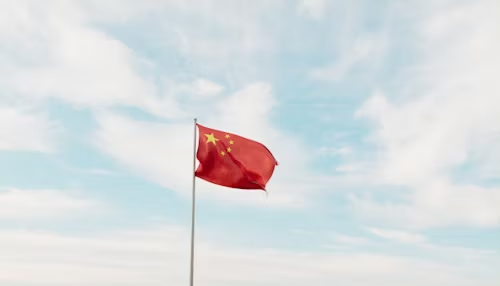
老师 10.01 :老师:同学们,我们看, 在天安门前每天从太阳一起升旗的, 就是我们的国旗。 你用小手再指一指国旗。
Lǎoshī 10.01 lǎoshī : tóngxuémén , wǒmén kàn, zài tiānānmén qián měitiān cóng tàiyáng yī qǐ shēng qí de , jiùshì wǒmén de guóqí 。Nǐ yòng xiǎoshǒu zài zhǐyīzhǐ guóqí.
Teacher: Students, Let's look. Every day in front ot Tiananmen (Square) a flag is raised as the sun comes up. This is our national flag. Use your finger to point at the national flag.
老师 10.16: 数一数国旗上有几颗五角星呢?
lǎo shī: shù yī shù guó qí shàng yǒu jī kē wǔ jiǎo xīng ne?
Count how many stars there are on the flag.
Grammar note
数 is the character for maths, and when we use it with - and another 数 it means to count. In much the same way as we would say 说一说, meaning to speak, or 看一看, meaning to look.
Culture note
The red colour of the national flag of the People's Republic of China symbolizes revolution. The five five-pointed stars on the flag and their relationship symbolize the unity of the revolutionary people under the leadership of the Communist Party of China, represented by the large star. The five-pointed stars are yellow to highlight their brightness against the red background. Yellow is brighter and more beautiful than white. The four smaller five-pointed stars each have a point facing the center point of the larger star, signifying the unity of the peasants,the workers, the petty beorgeoisie in the cities, and the national beorgoisie under the leadership of the Communist Party.
10.21 老师:一共有五颗五角星。你说对了吗?
lǎo shī : yīgòng yǒu wǔ kē wǔjiǎoxīng 。 Nǐ shuō duì le má ?
Altogether there are 5 stars. Did you get it right?
10.29 老师:一颗大大的五角星,四颗金灿灿的小五角星位绕着他。
lǎo shī : yī kē dàdà de wǔjiǎoxīng ,sì kē jīncàncàn de xiǎowǔjiǎoxīng wèi ràozhe tā
There is one really big star, and 4 smaller bright shining stars that surround it.
10.35 老师:我们国旗的名字就叫:五星红旗。我们一起来嘟嘟:五星红旗。
lǎoshī : wǒmén guóqí de míngzì jiù jiào : wǔxīnghóngqí 。 wǒmén yīqǐ lái dūdū: wǔxīnghóngqí。
Our national flg is called the 5 star Red Flag. Let's say it together: 5 Star Red Flag.
10.47 老师:同学们你们都在那看见过五星红旗呢?
lǎo shī : tóngxuémén nǐmén dū zàinà kànjiàn guòwǔxīnghóngqí ne ?
Teacher: Students, in what places have you see the 5 Star Red Flag before?
10.54 学生:在体育比赛颁奖时我看到国五行红旗。
xuéshēng : zài tǐyù bǐsài bānjiǎng shí wǒ kàndào guó wǔxínghóngqí 。
Student: At an awards ceremony for a sports competition I saw our national flag, the 5 Star Red Flag.
xuéshēng 2: lǎoshī zài hé jiārén yīqǐ kàn huǒjiàn fāshè de xīnwén shì 。 Kàndào huǒjiàn báisè de shēnshàng jiùyǒu xiānyàn de wǔxīnghóng qí.
Student 2: Teacher, while watching the news with my family we saw an item about a new space rocket. I saw that on the white body of the rocket there was a bright Five Star Red Flag.
11.13 学生 3:国庆节的时候很多人都会在自己家的门前悬挂国旗。
xué shēng 3: Guóqìngjié de shíhòu hěn duō rén dou huì zài zìjǐ jiā de ménqián xuánguà guóqí.
During the National Day Celebrations, many people hang the national flag in front of their doors.
11.20 学生 4: 老师我在学校操场上也看到了高高飘扬的国旗。
xué shēng 4: lǎoshī wǒ zài xuéxiào cāocháng shàng yě kàndào le gāo gāo piāoyáng de guóqí
Student 4: Teacher, in our school playground, I saw a big flag fluttering.
11.28 老师:是啊。在很多重要的地方重要的时间我们都能够看到鲜艳的五星红旗。
lǎo shī : shì ā 。 zài hěnduō zhòngyào de dìfāng zhòngyào de shíjiān wǒmén dou nénggòu kàndào xiānyàn de wǔxīnghóngqí.
Teacher: yes. There are lots of important places and important dates where we can see the brightly-coloured 5 Star Red Flag.
11.40 老师:同学们,每个星期一的早晨学校都会举行庄严的升旗仪式. 那么在生活仪式我们一年级的小同学该怎样做呢?
lǎo shī : tóngxuémén , měi gè xīngqīyī de zǎochén xuéxiào dou huì jǔxíng zhuāngyán de shēngqí yíshì . Nàme zài shēnghuó yíshì wǒmén yīniánjí de xiǎo tóngxué gāi zěnyàng zuò ne ?
Teacher: Students. every monday morning school every school (in China) holds an inmportant falg-raisin ceremeony. So during inmportant ceremonies how should year 1 primary school students behave?
11.56 老师:我们要面向国旗立正站好,双眼注视的国旗,心注目礼。
lǎo shī : wǒ mén yào miàn xiàng guóqí lì zhèng zhàn hǎo , shuāngyǎn zhùshì de guóqí , xīn zhù mù lǐ.
Teacher: We need to face the National Flag, standing straight, saluting the flag with (both) our eyes and our hearts.
12.10 老师:好。现在呀,让我们所有的同学都请起立。让我们听着国歌。向国旗心注目礼。
lǎo shī : hǎo 。 xiànzàiyā , ràng wǒmén suǒyǒu de tóngxué dou qǐng qǐ lì, ràng wǒmén tīngzhe guógē 。 xiàng guó qí xīn zhù mù lǐ 。
Teacher. Now, us students, lets stand to listen to the national anthem. Saluting with our eyes towards the flag.
13.30 老师:好。同学们请坐,我们无论在什么地方只要听到国歌,看到国旗冉冉升旗,我们都要立正站好,向国旗心注目礼。
lǎoshī : hǎo 。 tóngxuémén qǐng zuò , wǒmén wúlùn zài shénme dìfāng zhīyào tīngdào guó gē , kàn dào guóqí rǎnrǎn shēngqí , wǒmén dou yào lìzhèng zhànhǎo , xiàng guóqí xīn zhùmùlǐ.
Teacher: Good. Students, please sit. No matter where we are, if we see the National Flag being raises or lowered, we should always stand to attention, and salute in our hearts.
13.15 老师:我们每一个中国人都热爱我们的祖国,热爱我们的国旗。
lǎo shī : wǒmén měi yī gè zhōngguórén dou rèài wǒmén de zǔguó , rèài wǒmén de guóqí.
Teacher: Every one of us Chinese loves their country, and loves their flag.
13.55 老师: 有一位小同学就像用一首儿歌来表达对祖国的热爱之挚情。我们一起来听听吧。
lǎo shī : yǒu yīwèi xiǎo tóngxué jiù xiàng yòng yīshǒu érgē lái biǎodá duì zǔguó de rèài zhìqíng 。 wǒmén yīqǐ lái tīngtīng bā 。
Teacher: One of the students would like to use a song to represent the genuine feelings they have for their country.
从小爱祖国
从小
from a young age
爱
love
祖国
country
鸟儿
bird
爱
loves
蓝天
blue sky
鱼儿
fish
爱
loves
江河
river
蚯蚓
earthworm
爱
loves
泥土
mud
蜜蜂
bee
爱
loves
花朵
the flowers
我们
us
好
good students
儿童
students
从小
from young
爱
love
祖国
our country
Students this brings us to the end of our study of the Chinese Primary School Textbook (小学语文一年级上册) Lesson 1. We hope you have enjoyed this class and found it to be a useful resource for your study of Mandarin Chinese. See you in the next class! If you have any questions, then feel free to contact us on: geoff@lanternlanguages.com. This video was made by the Chinese Government State Education Department. We have interpreted the text and made it easy to follow for Chinese parents around the world as a teaching resource for their second-generation offspring. In addition this accessible will make learning Chinese much easier for non-native speakers whatever their background or language level, from beginner to intermediate and all in-between. Whether you are living in China, are taking the HSK, or have a Chinese Mum and Dad and want to get in touch with your roots, this series will be a fantastic springboard for you.